NPE / SWMO: Neonatal Reflective Scaling Vaccine (NRS‑1)
Prepared by: Suburban Wildlife Mediation Office (SWMO)
A Division of the Neuro‑Practical Enhancements (NPE) Program
Reviewed by: Safety & Compliance Oversight Committee (Who would like it noted that they “did not approve the phrase ‘reflective scaling’ but were outvoted”)
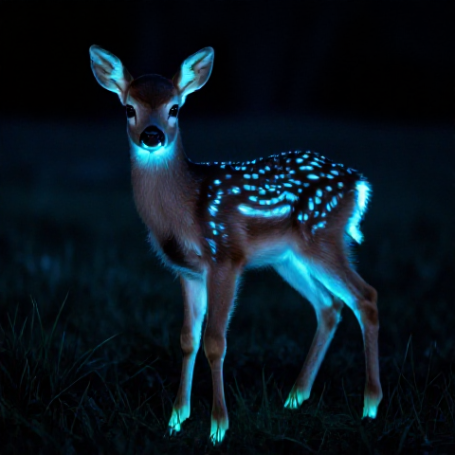
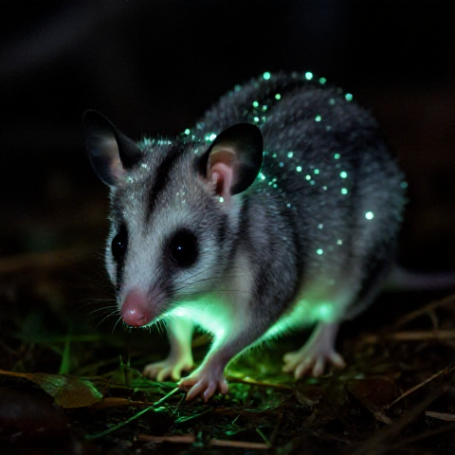
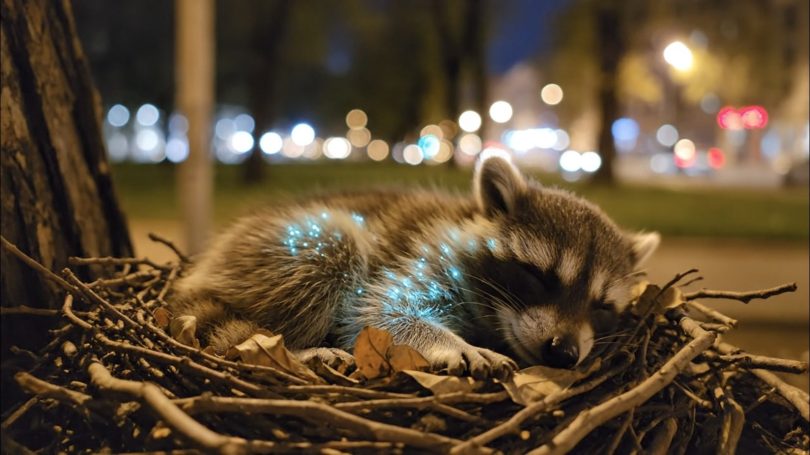
After a few months working with the Neonatal Reflective Scaling Vaccine, I have reached the point where I can explain it in my sleep, and honestly, I probably have. The short version is that it gives newborn nocturnal animals a temporary reflective sheen so drivers can actually see them at night. It does not change anything about them long term. It just buys them a safer first year. When the shimmer first shows up, it is subtle and almost pretty, which is more than I can say for most things I deal with on night shift. It hangs around until they are about a year old, then slowly fades out until it is gone by age two.
Most of my time is spent with the trap and release stations in town. They are simple enough. An animal walks in, the door closes, the dose goes out, and the animal walks back out again looking mildly offended. No handling required, which is good because I do not have the energy to wrestle anything smaller than a sandwich at this point. Out in the woods, we rely on the Solar Dark units. They charge during the day, wake up at night, and do their job without needing us to hike out there unless something breaks. They are sturdy enough to survive weather, branches, and raccoons who seem determined to test the limits of every bolt and hinge.
The science behind the dose is more complicated than I care to think about at the end of a long shift, but the basics are that a mix of components encourages temporary reflective micro scales to form on the fur or skin. It spreads evenly, it stays consistent, and it fades on its own. The enzyme that handles the fade out also nudges the animal toward the secondary feed later on, which is one less thing for us to worry about.
As for side effects, most of what I have seen is harmless. Some animals get a stronger shimmer after grooming, and some leave a faint trail when they run, which is strange but not the strangest thing I have seen this year. Other animals stare at them like they are trying to figure out what went wrong, and humans do the same. The only thing that ever makes me pause is the brief halo effect, a quick outline of light that pops up for a second or two. It resolves on its own, but the first time you see it at three in the morning, it does make you reconsider your life choices.
See below for specific break down of procedures.
NPE / SWMO PROCEDURE: Neonatal Reflective Scaling Vaccine (NRS‑1)
Prepared by: Suburban Wildlife Mediation Office (SWMO)
A Division of the Neuro‑Practical Enhancements (NPE) Program
Reviewed by: Safety & Compliance Oversight Committee (Who would like it noted that they “did not approve the phrase ‘reflective scaling’ but were outvoted”)
Procedure Overview
The Neonatal Reflective Scaling Vaccine (NRS‑1) is designed for newborn nocturnal wildlife in densely populated human environments.
Its purpose is to:
Increase visibility of small nocturnal animals
Reduce nighttime vehicle collisions
Improve human–wildlife coexistence
Support early‑life survival without altering long‑term biology
NRS‑1 produces temporary reflective micro‑scaling on the outermost layer of neonatal fur or skin, creating a shimmering, light‑catching effect visible in low‑light conditions.
The effect is temporary, gradually degrading between ages 1 and 2 years, at which point the animal transitions to the secondary feed‑based system.
Deployment Method
1. Trap‑and‑Release Stations (Urban/Suburban)
NRS‑1 is administered via automated micro‑dose applicators embedded in humane wildlife traps. Upon entry:
The trap closes
A single micro‑dose is delivered
The animal is released within 30–90 seconds
No human handling is required.
2. Solar‑Dark Stations (Dense Forest / Hard‑to‑Reach Areas)
For regions where human access is limited or unsafe, SWMO deploys Solar‑Dark Autonomous Units, which:
Charge during daylight
Operate exclusively at night
Use motion‑triggered micro‑dose dispersal
Avoid accidental human exposure through species specific height and weight sensors
These units are designed to withstand:
Heavy foliage
Moisture
Curious raccoons
Extremely curious raccoons
Active Components
Reflective Micro‑Scale Induction Complex (RMIC‑β)
Transient Dermal Shimmer Matrix (TDSM‑4)
Nocturnal Visibility Stabilizer (NVS‑2)
Age‑Linked Degradation Enzyme (ALDE‑1)
Bio‑Safe Suspension Medium (BSM‑L)
Mechanism of Action
RMIC‑β encourages the formation of temporary reflective micro‑scales along neonatal fur shafts. TDSM‑4 distributes these scales evenly, preventing “patchy reflection zones.” NVS‑2 ensures the effect remains consistent through the first year. ALDE‑1 gradually breaks down the reflective structures between ages 1–2, releasing a behavioral cue enzyme that primes the animal to seek the secondary Reflective Coat Enhancement Feed (RCEF‑2).
See: NPE / SWMO PROCEDURE: Reflective Coat Enhancement Feed (RCEF‑2)
Common Side Effects
Mild shimmer intensification during grooming
Temporary “wave trail” effect when running
Increased curiosity from other animals
Occasional fascination from humans
Concerning Side Effect
Brief luminal over‑reflection resulting in momentary haloing around the animal’s outline.
This lasts 1–3 seconds and resolves spontaneously.
Duration
Full effect: Birth → 12 months
Gradual fade: 12 → 24 months
Complete degradation: By age 2
Executive Sign‑Off
Approved by: Marla J. Kettering Vice President, NPE (Who would like to clarify that reflective wildlife is not a fashion statement)
Safety & Compliance Sign‑Off
Reviewed and reluctantly initialed by: D. Halvorsen, RN, CCO (Who would like it noted that wildlife did not request this program)